installation information

Courtesy of Zachary Balber
at the baths
Location: NSU Art Museum | Fort Lauderdale, FL
Curator: Ariella Wolens, Bryant-Taylor Curator
Exhibition Dates: September 21, 2025 - March 22, 2026
Background
The first known work of homoerotic art is The Tomb of the Diver, an Etruscan fresco dating to approximately 470 BC, located in Paestum. This tomb features four walls of frescoes depicting men reclining at a symposium, crowned by an image of a young male diver leaping off a cliff into the water—possibly symbolizing death.
Throughout the history of queer art, the male figure has frequently been depicted in states of rest—reclining, partially or fully nude, often in communal bath settings such as bathhouses and beaches—blurring the lines between private and public spaces. Mid-century physique magazines like Physique Pictorial and Grecian Guild Pictorial placed nearly nude male figures in settings reminiscent of the classical world. As historian George Chauncey noted, “By imagining they had collective roots in the past, they asserted a collective identity in the present.” These images explored themes of desire, intimacy, loss, and belonging.
In the 1960s and 70s, the Continental Baths, located in the basement of the Astoria Hotel in New York City, echoed the communal baths of ancient Greece. Here, men gathered around pools and steam rooms, forming a cultural hub that hosted performances by Bette Midler, Barry Manilow, and Labelle (Patti LaBelle), contributing to the rise of disco and DJ culture.
The onset of the AIDS epidemic led to a decline in bathhouses, yet these queer cultural institutions continue to exist today. Venues such as Club Fort Lauderdale, Clubhouse II, and 321 Slammer in Fort Lauderdale remain active, while new bathhouses are emerging, including the Russian Turkish Baths and Castle Beach Club in Miami, and Hürrem, opening in Wynwood. These spaces provide not only physical respite but also a sense of community, allowing individuals to escape societal pressures and marginalization.
By exploring the phenomenology of self, other, and environment, these spaces help define what it means to exist in the world—bound and shaped by the implications of our bodies.
Eric Hobsbawm and Terence Ranger, eds., The Invention of Tradition ( Cambridge: Cambridge University Press, 2012): Johnson, Buying Gay: How Physique Entrepreneurs Sparked a Movement, 94
More Info: https://nsuartmuseum.org/exhibition/at-the-baths/
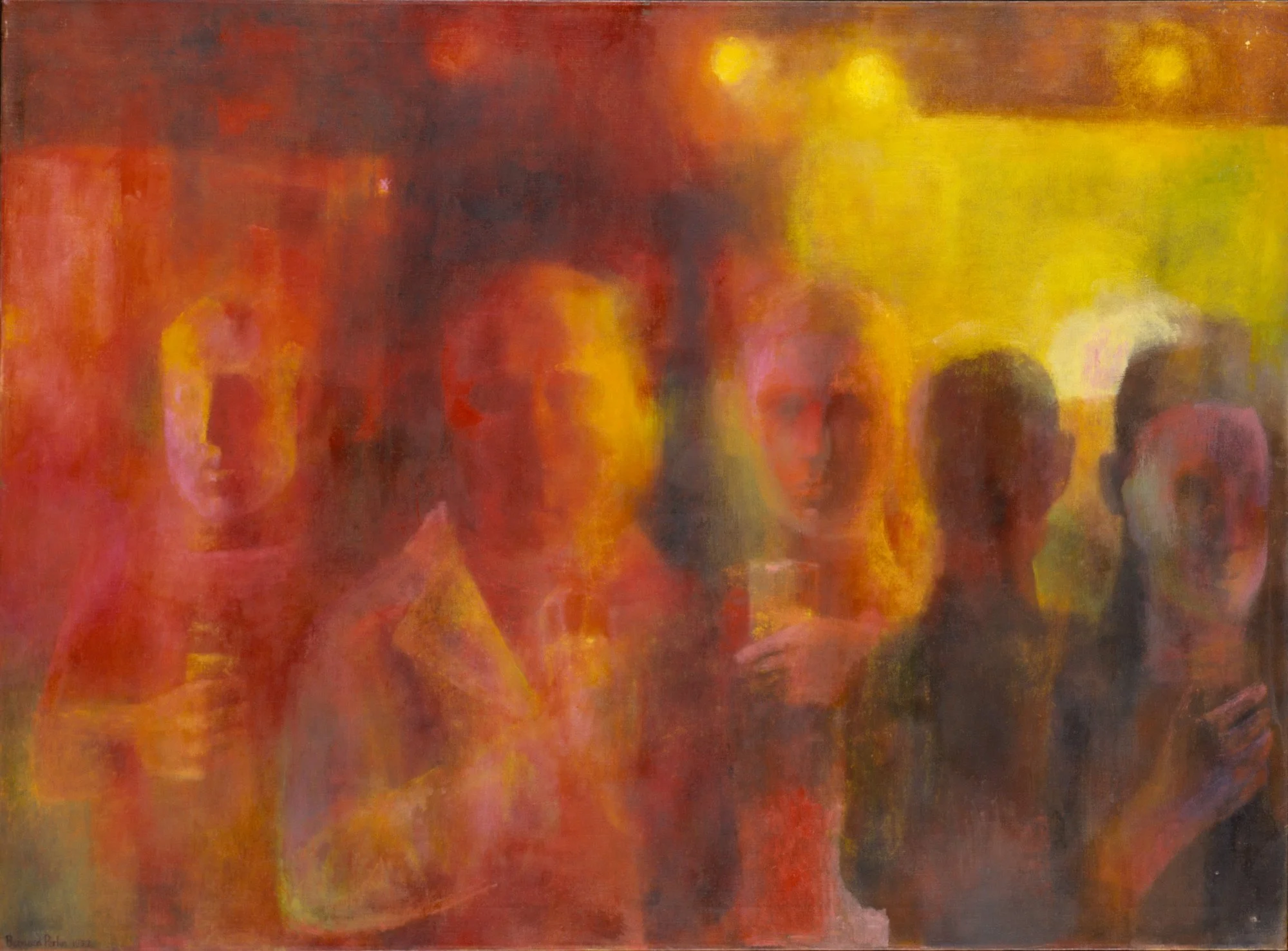
The Bar
Bernard Perlin
Oil on canvas
1957
Smithsonian American Art Museum, Washington DC
Pull Up to the Bumper
Location: MOCA North Miami | North Miami, FL
Curator: Adeze Wilford
Exhibition Dates: May 10, 2022 - October 1, 2022
Background
Alluding to Bernard Perlin’s painting, The Bar (1957), this installation captures a snapshot of
a bar-like space that queer people have carved out as their own. The creation and formation
of queer communities over time, have been facilitated by these bar spaces; allowing one to
live authentically, form connections, gain rights, and find a place to escape from the
heteronormative world. Queer bars offer a place to dance, dream, and be free; shimmering
in a mirage of possibilities.
In this installation, hand-built andromorphic ceramics objects, sprawling across a bar-height
stool and mass, evoking genderless beings through their scale and ambiguous orifices, are
seemingly in conversation with one another. Shifting washes of broken color and expressive
forms render the work in a continual state of flux, as the viewer moves around the piece,
suggesting the fluidity of expression, identity, and desire.
The title of this work is from Grace Jones’ 1981 dance hit “Pull Up to the Bumper,”
referencing the sexual innuendo of its lyrics, these ‘beings’ are caught in a camaraderie of
carnal desires and pursuits. With their patulous openings, proffering the interiority of the
individuals through their assertive color, they seem to be engaging with the bodies of one
another. While, sexual signaling is expressed through the inclusion of color-coded hankies,
referencing the ‘”hankie codes” of 1970’s and 80s bar culture. Continuing today, these
colors are utilized today in BDSM fetish wear to signal sexual preferences and desires.
More Info: https://www.mocanomi.org/posts/south-florida-cultural-consortium-sfcc-2023
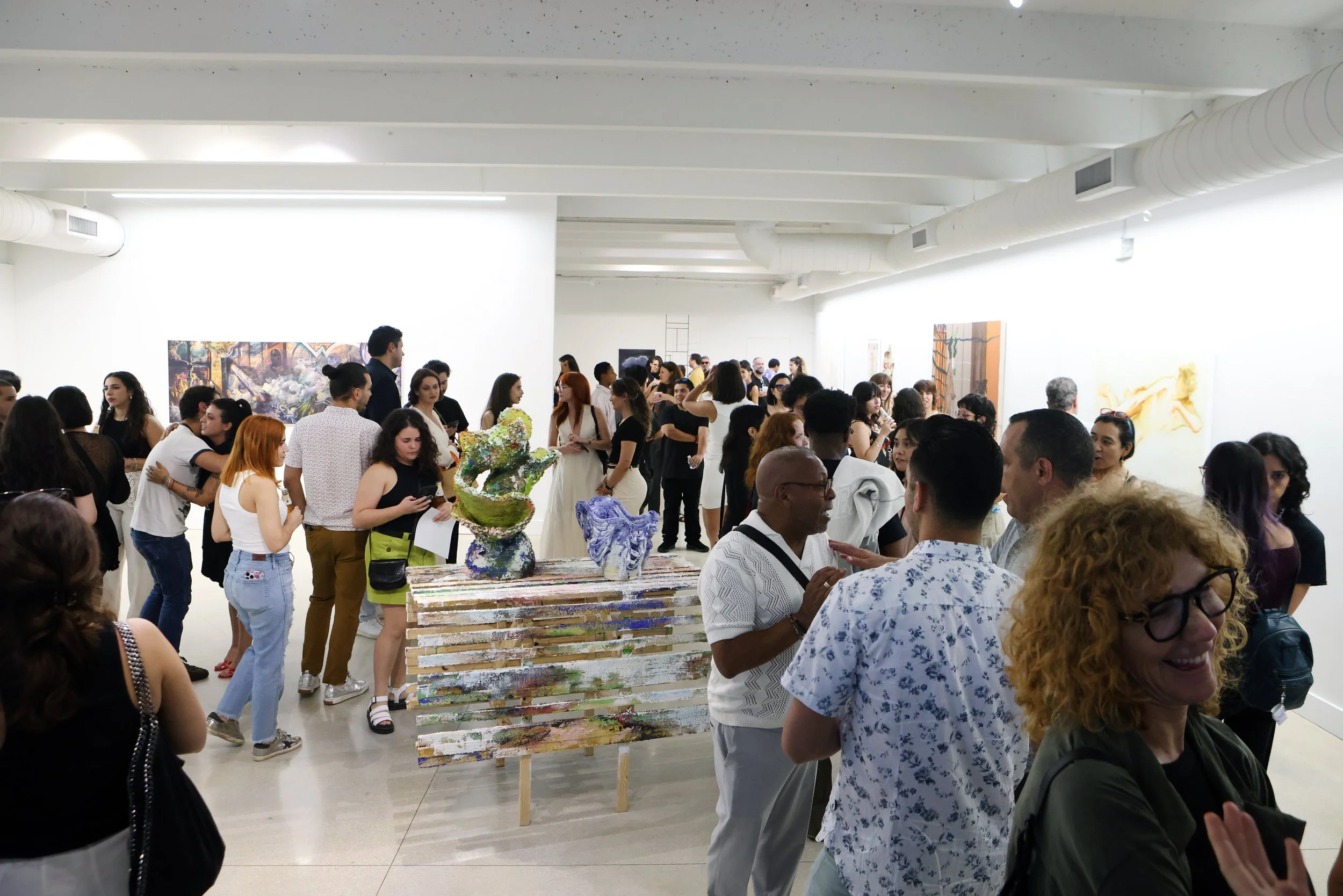
Courtesy of Logan Fazio
Young Fresh Different ‘24 | Miami, FL
Location: Zilberman Gallery | Miami, FL
Curator: Omar Lopez-Chahoud in partnership with Fountainhead Arts
Exhibition Dates: June 28, 2024 - August 23, 2024
Background
For the opening night of his play Lady Windermere’s Fan (1892), Oscar Wilde instructs his young acolytes, in concert with one of the stage actors, to adorn their lapels with green carnations. Mystifying fellow patrons about the flora’s possible symbolism, Wilde and his cohorts catalyze the green carnation into a symbol of queerness. These flowers of a hypernatural hue, dyed with the arsenious oxide colorant, Scheele’s green (Carl Wilhelm Scheele, 1775), embody danger, decadence, and subversion-- while being emblematic of our desire to be visible and belong. Rendering the work in an occulting strata of virescent hues, this installation explores: queer ecology, aesthetics, and cultural objects, through the morphology of botany, the blurring of the fine and decorative art, and materiality (including handkerchiefs (see: hanky code), glitter, etc).
More Information: https://www.zilbermangallery.com/yfd-miami-2024-eng-e375.html